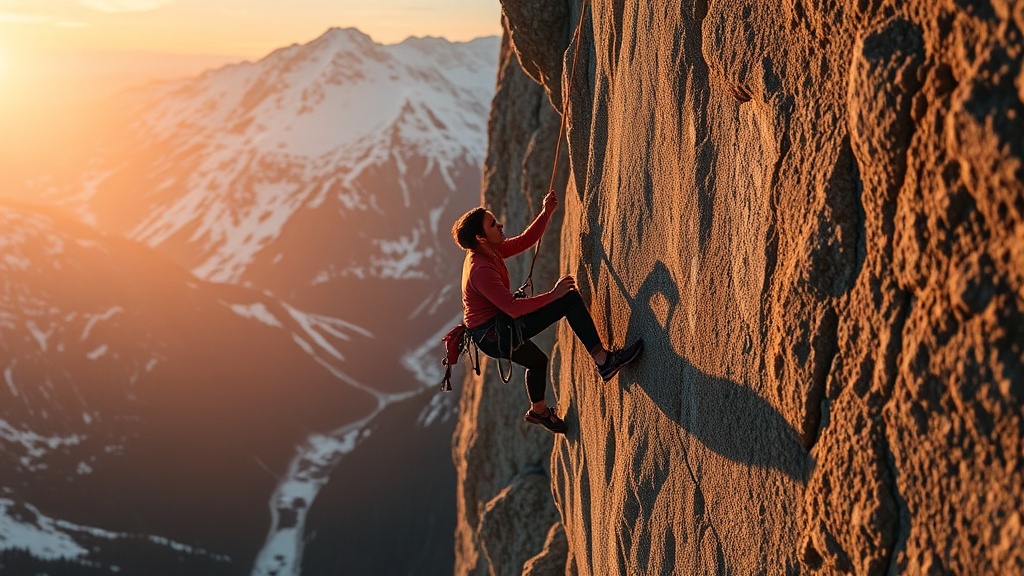
Why Strong Climbers Still Fall on Slab: The Hidden Role of Posterior Chain Power

A 2019 study published in the Journal of Sports Sciences found that elite sport climbers generate over 40% more force through their posterior chain during vertical movement than intermediate climbers—yet most training programs barely touch hamstrings, glutes, or spinal erectors. That's a staggering gap between what separates good climbers from great ones and what the average person actually trains for.
This guide breaks down posterior chain development specifically for rock climbers. You'll learn why slab climbing exposes weak glutes like nothing else, how to build hip extension power without bulky gym equipment, and the specific movement patterns that translate directly to better body tension on overhangs. Whether you're nursing yet another flash-pump failure on technical terrain or simply tired of your feet cutting loose at inconvenient moments, the exercises and protocols here address the root cause—not just the symptoms.
What Exactly Is the Posterior Chain and Why Do Climbers Ignore It?
Your posterior chain encompasses everything on your backside: hamstrings, glutes, spinal erectors, lats, rear deltoids, and calves. In climbing, these muscles work as an integrated system to pull your hips into the wall, maintain body tension, and generate upward momentum through your legs rather than your fingers.
The problem? Most climbers train like pull-up specialists. We obsess over fingerboards, campus boards, and lock-off strength—front-chain dominant movements that reinforce the very imbalances causing us to barn-door off slab routes. Your hip flexors get tight from all that sitting and heel-hooking. Your glutes fall asleep. And suddenly you're relying on arm strength to solve problems that should be handled by the largest muscles in your body.
Dr. Jared Vagy—known in climbing circles as The Climbing Doctor—has documented this extensively. His research on climbing movement patterns shows that hip dysfunction contributes to everything from lower back pain to shoulder impingement because your body compensates for weak glutes by over-recruiting smaller muscle groups upstream. The posterior chain isn't just about power generation; it's your injury prevention foundation.
Can You Build Posterior Chain Strength Without a Gym Membership?
Absolutely. Climbers have a weird advantage here—we're already comfortable with bodyweight manipulation, and posterior chain work requires minimal equipment. Here's a three-exercise progression that fits in any living room:
The Hip Hinge Foundation
Before adding load, you need to own the movement pattern. Stand with feet hip-width apart, soft knees, and imagine someone pulling your hips backward with a rope. Your torso tips forward as a single unit—no rounding in the lower back. You should feel tension building in your hamstrings, not your lower back.
Practice this daily: 3 sets of 15 slow reps, pausing for two seconds at the bottom position. Film yourself from the side—if your spine looks like a question mark, you're doing it wrong. The goal is hip mobility combined with spinal stability, not touching your toes.
Single-Leg Romanian Deadlifts
Once the hip hinge feels natural, progress to single-leg variations. Grab a water jug, a backpack with books—anything that adds 10-20 pounds. Stand on one leg, hinge forward while extending the free leg behind you, lower until your torso is nearly parallel to the floor, then drive through the heel to stand.
Single-leg work matters for climbers because that's exactly how we move on the wall. Every high step, every rock-over, every drop-knee requires one hip to stabilize while the other generates power. The balance component also recruits your small stabilizer muscles—stuff that barbell deadlifts miss entirely.
Start with 3 sets of 8 reps per leg. When that feels easy, slow down the eccentric (lowering) phase to three full seconds. Time under tension builds climbing-specific strength better than moving heavy loads quickly.
Nordic Hamstring Curls
This is the gold standard for hamstring strength—and it's humbling. Kneel on a pad (or folded towel), hook your heels under a sturdy couch or have a partner hold your ankles. Keep your body straight from knees to shoulders, then lower yourself forward as slowly as possible using only your hamstrings.
Most people crash face-first on their first attempt. That's normal. Use your hands to catch yourself, push back up, and repeat. Over time, you'll develop eccentric strength that protects against hamstring strains—the third most common climbing injury according to research in the British Journal of Sports Medicine.
Work up to 3 sets of 5 controlled descents. When you can lower yourself to the floor and pull back up without assistance, you've developed legitimate posterior chain strength that'll show up on the wall immediately.
How Do You Actually Apply This to Climbing Movement?
Strength in isolation means nothing if you can't recruit it while hanging by your fingertips. The carryover happens through specific movement drills that bridge the gap between training and performance.
The Tension Drill
Find a vertical or slightly overhanging route well below your limit—something you'd normally flash. Climb it while consciously squeezing your glutes and engaging your core before every move. Feel the difference when your hips are pulled into the wall versus hanging away from it. The former puts weight through your feet; the latter punishes your forearms.
Most climbers climb with passive hips—especially on slabs where the wall angle doesn't force engagement. Active hip engagement transforms slab climbing from a terrifying smear-fest into a controlled, efficient movement. You'll stick moves you previously thought required more finger strength or better friction.
Quiet Feet With Hip Drive
The classic "quiet feet" drill gets an upgrade. As you place each foot, focus on driving through that heel to initiate the next movement. This creates a sequencing pattern: foot placement → hip engagement → arm follow-through. Your arms become stabilization points, not pulling engines.
Practice this on juggy terrain first. The goal is rewiring your movement patterns, not getting pumped. Once the hip-drive sequence feels automatic, apply it to technical face climbing. You'll find yourself resting more effectively on marginal feet because your posterior chain is doing the work your quads and calves used to struggle through.
Campus Board With a Catch
This one's advanced—and controversial—but hear me out. Standard campus boarding builds explosive pulling power. Campus boarding with a focus on catching and stabilizing builds the posterior chain's reactive strength.
Make a dynamic move between rungs, but instead of immediately reaching for the next hold, stabilize for a full second. Your lats, spinal erectors, and glutes fire together to prevent swinging. That stabilization demand mimics exactly what happens when you stick a deadpoint on overhanging terrain.
Does Posterior Chain Training Actually Prevent Climbing Injuries?
The research says yes—with caveats. A 2021 systematic review in Sports Health found that posterior chain strengthening reduced overuse injuries in overhead athletes by 31%. Climbers aren't throwing baseballs, but we're constantly reaching overhead while stabilizing dynamic loads.
The injury prevention mechanism works two ways. First, strong glutes and hamstrings protect your lower back during high-step moves and heel hooks—positions that hyper-extend the lumbar spine in weak climbers. Second, posterior chain dominance in leg movement reduces the load on your finger flexors. When your hips drive the movement, you're not crimping as hard to pull yourself through sequences.
That said, balance matters. You can't abandon pulling strength entirely. The goal is evening out the ratio—not flipping it. Most climbers are 70% front-dominant; aiming for something closer to 50/50 creates resilient, well-rounded athletes who can handle diverse terrain without breaking down.
What About Core Training—Doesn't That Cover the Same Ground?
Core and posterior chain work overlap, but they're not identical. Your core (rectus abdominis, obliques, transverse abdominis) provides stability and pressure management. Your posterior chain provides movement and power. You need both—especially the connection between them.
The dead bug exercise bridges this gap beautifully. Lie on your back, press your lower spine into the floor (core engagement), extend opposite arm and leg while maintaining that spinal position, then return to center. The movement happens at the hip and shoulder (posterior chain), but the control comes from anterior core stability.
Try this progression: 3 sets of 10 slow reps, focusing on never letting your lower back arch. Add a light dumbbell in the extended hand for load once the pattern is solid. This isn't about crushing your abs—it's about coordinating anterior and posterior systems while maintaining spinal integrity. That coordination transfers directly to climbing's weird positions where you're simultaneously extending one limb and pulling with another.
The Programming Reality Check
You don't need to overhaul your entire training plan. Add two posterior chain sessions weekly—20 minutes each, done on non-climbing days or after light sessions. Focus on the exercises outlined above, progressing from bodyweight to loaded variations over 8-12 weeks.
Track your climbing, not your lifting numbers. The goal isn't a heavier deadlift; it's better hip position on the wall, less lower back fatigue on long routes, and the ability to rest on feet that previously felt worthless. Those metrics matter more than any gym PR.
The best climbers don't look like they're trying hard because they're using the right muscles at the right times. Posterior chain strength is invisible until you see someone float up a slab that shuts everyone else down.
Start with the hip hinge. Master the single-leg patterns. Build your hamstring resilience. And watch your climbing transform—not through better fingers or lighter shoes, but through the power you've been ignoring in your own hips.