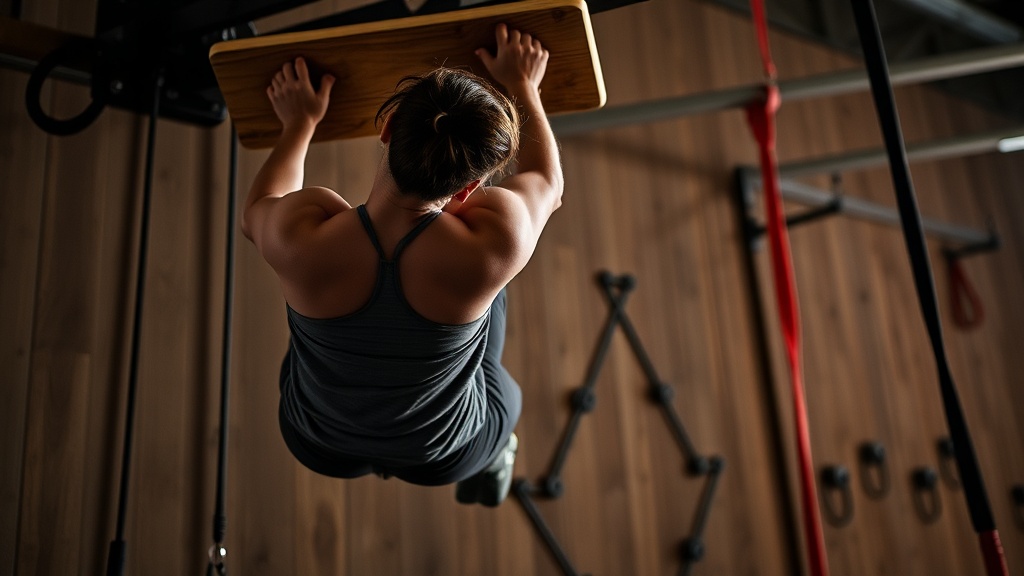
Beyond the Hangboard: Developing Real-World Grip Strength

Why is my grip strength failing on big climbs?
Do you ever find yourself halfway up a pitch, feeling like your forearms are literally on fire, only to realize your fingers just won't stay on the holds? It's a frustrating reality for many climbers. You might spend hours on a hangboard or doing heavy deadlifts, yet when you hit a crux on a real rock, your grip strength vanishes. This happens because there is a massive gap between static, controlled finger strength and the dynamic, unpredictable nature of actual climbing. We need to look at how your body handles tension, grip endurance, and the actual mechanics of holding onto varied surfaces.
The problem often isn't just about how much weight you can hang with. It's about how you apply that strength under stress. Most training tools—like the standard hangboard—are predictable. The holds are consistent, the angle is fixed, and the environment is controlled. Real climbing is anything but controlled. You're dealing with heat, humidity, varying textures, and the constant movement of your body weight. If your training only focuses on one type of grip, you're leaving yourself vulnerable to the unexpected.
To fix this, we have to move beyond just hanging. We need to introduce variability. This means training for different types of holds: crimps, slopers, jugs, and pockets. Each of these requires a different neuromuscular response. A sloper, for example, relies heavily on friction and hand position rather than just raw finger strength. If you only train on edges, you'll find yourself slipping off the slightest rounded hold when you're out in the field.
Can I improve my grip endurance with volume?
Volume is a double-edged sword. If you're doing high-volume sessions just to get tired, you might actually be training your body to be inefficient. True endurance training involves building the ability to recover while under tension. This is where the concept of "pump management" comes in. Instead of just climbing easy routes until you're exhausted, try incorporating specific intervals that force your body to handle lactic acid buildup. Think about high-intensity intervals on the wall where you climb a difficult section, descend, and immediately move to another hard section without a break.
One effective method is the "4x4" style of training, but adapted for climbing. Instead of just climbing easy routes, pick four different problems that are at your limit. Climb them back-to-back-to-back-to-back. This forces your forearms to deal with the buildup of metabolic byproducts while you're still trying to maintain precise movement. It's not just about the muscles; it's about the nervous system's ability to keep firing even when the signals are getting fuzzy.
For more detailed breakdowns on physiological responses to intense exercise, the National Center for Biotechnology Information offers excellent research on how muscle fatigue affects motor control. Understanding this can help you realize that your "failure" isn't always a lack of strength—it's often a failure of the nervous system to manage the fatigue you've generated.
How do I train for better contact strength?
Contact strength is that split-second ability to grab a hold and stick it. It's the difference between a clean catch and a terrifying slip. This is highly dependent on your ability to react quickly to a hold. To train this, you can't just hang statically. You need dynamic movements. This might mean:
- Campus Boarding: Using a campus board to develop explosive power and quick contact.
- MoonBoarding: Using highly vertical, difficult holds to force quick, decisive movements.
- Deadpointing: Practicing reaching for holds at the end of a movement to master the catch.
The key here is intensity. If you're doing these movements, you shouldn't be doing them when you're already tired. You want to practice the quality of the catch when you are fresh. If you're already pumped, you aren't training contact strength; you're just practicing how to fall. Make sure you're prioritizing the quality of each movement over the total number of reps.
What are the best ways to prevent grip fatigue?
If you want to climb longer sessions, you have to look at your recovery and your technique. A lot of people think they have a grip strength problem, but they actually have a weight distribution problem. If you're pulling too hard on your fingers because your core or your legs aren't engaged, your grip will fail much sooner. Keep your weight in your feet. Use your legs to drive your movement so your arms are just there to direct your path, not carry your entire weight.
Another factor is the mental aspect of fatigue. When you feel the pump coming, your instinct is often to tense up. This actually makes the fatigue worse. Instead, try to find ways to breathe and relax-on-the-move. This can be incredibly difficult when you're on a crux, but learning to manage that tension is what separates the experts from the intermediates. You can read more about the physical demands of high-intensity sports through Sports Medicine resources to understand how to manage the physiological stress of climbing.
Lastly, don't forget the role of nutrition and hydration in muscle function. If you're dehydrated, your muscle contractions will be less efficient, and your grip will feel much weaker than it actually is. Even a small drop in hydration can lead to a significant decrease in your ability to maintain tension on a long route. Keep an eye on your electrolyte intake during long sessions, especially in warmer climates where perspiration is high.