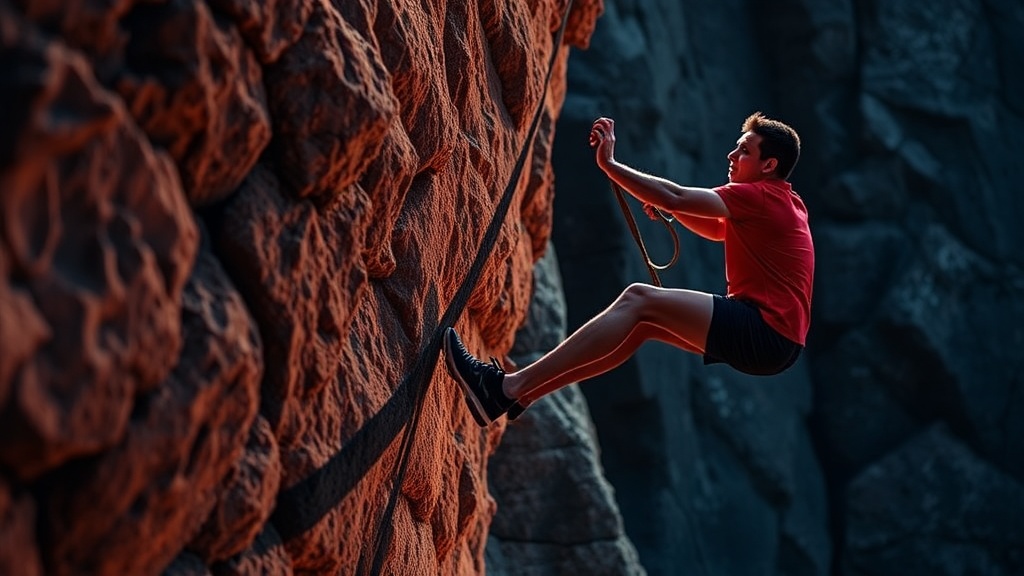
4 Movement Drills to Improve Your Climbing Footwork

Silent Feet Drill
Sticky Feet Method
Precision Toes Drill
The One-Foot Lead Drill
Research shows that nearly 70% of climbing falls are caused by foot slips or poor weight distribution rather than upper body failure. While most climbers obsess over their finger strength or forearm pump, the real secret to climbing higher often lies in the soles of your feet. This post breaks down four specific drills designed to sharpen your precision, improve your balance, and ensure your feet stay glued to the wall when the crux hits. We'll look at how to move from "clinging on" to "dancing" on the rock.
Why is footwork so important in rock climbing?
Footwork is the foundation of climbing efficiency because it dictates how much weight your arms have to carry. If your feet are dancing around or slipping, you're wasting energy that should be used for your next move. Precise foot placement allows you to shift your center of gravity, making difficult overhangs feel much more manageable. It's the difference between a climber who's constantly "pumped" and one who looks like they're barely working.
When you master your feet, you reduce the load on your smaller muscle groups. Think about it—if you can trust your feet to hold your weight, your fingers don't have to work nearly as hard. This is why many top-tier climbers spend more time on slab or vertical terrain to refine their technique. It's not just about strength; it's about geometry.
A lack of foot precision often leads to "barn-dooring," where your hips swing out away from the wall because your feet couldn't find a stable purchase. This is a common issue for beginners, but even advanced climbers struggle when they get tired. You need to train your feet to be as reliable as your hands.
The Importance of Precision over Power
A lot of people think climbing is a game of pulling. It isn't. It's a game of positioning. If you can't place a toe on a tiny crimp without looking, you're going to struggle on steeper routes regardless of how much you can hang on a hangboard.
What are the best drills for better climbing footwork?
The best drills for footwork focus on repetitive, high-precision movements that force you to slow down and think about every placement. You can practice these on any climbing wall, whether you're at a local bouldering gym or out at a crag. These aren't just "exercises"—they're way of training your brain to communicate with your lower body.
Here are four drills you can start using in your next session:
- The Silent Feet Drill: This is the gold standard for precision. You climb a route (or a section of a boulder problem) and must place each foot without making a single sound. If your shoe scuffs or "clunks" against the wall, you failed the rep. It forces you to look at the hold, find the exact center, and place your foot with intent.
- The Sticky Feet Drill: Similar to silent feet, but with a twist. Once your foot touches a hold, you cannot move it again. No readjusting, no "scrubbing" for a better spot, and no wiggling. This builds incredible confidence in your ability to trust a single placement.
- The Weight Transfer Drill: This is great for slab climbing. You climb a vertical or slightly overhanging section and, at specific intervals, you must shift your weight entirely onto one foot before moving the other. This teaches you how to find your center of gravity and use your skeletal structure rather than just muscle.
- The Toe-Only Drill: On easier terrain, try climbing using only the tips of your climbing shoes (the toe part) rather than the smear or the edge. This builds the dexterity needed for tiny edges and helps you understand how to use the tension in your feet to stay close to the wall.
I've found that doing the Silent Feet drill during my warm-up is much more effective than just jumping straight into a project. It sets a mental tone of discipline. You're telling your brain: pay attention.
Comparison of Footwork Drill Focus
| Drill Name | Primary Focus | Difficulty Level | Best For |
|---|---|---|---|
| Silent Feet | Precision & Intent | Intermediate | Beginners learning placement |
| Sticky Feet | Stability & Confidence | Intermediate | Overhanging terrain |
| Weight Transfer | Balance & Center of Gravity | Advanced | Slab and Vertical climbing |
| Toe-Only | Dexterity & Toe Strength | Advanced | Small edges and crimps |
How can I improve my balance while climbing?
Improving your balance requires a combination of core strength, hip mobility, and mindful movement. You can't just "muscle" your way through a balance problem; you have to find the equilibrium between your center of mass and your contact points. This often means looking at your hips—if your hips are too far from the wall, your feet will struggle to stay engaged.
One thing to keep in mind is that your footwear plays a massive role. If you're wearing a soft, unstructured shoe, you might find it harder to maintain precision on tiny edges compared to a stiffer shoe like the La Sportiva Solution. However, a stiffer shoe can sometimes make it harder to feel the rock. Experiment with different gear to see what works for your foot shape.
Don't ignore your hip mobility either. If you can't get your hips close to the wall, your feet will naturally be pushed away, making it impossible to stay balanced. I've spent many sessions realizing that my "bad footwork" was actually just a lack of hip flexibility. (It's a tough pill to swallow, but it's the truth.)
If you're already working on your upper body, make sure you aren't neglecting the foundation. While building finger strength is vital for hard moves, your feet are what will keep you on the wall while you're searching for that next hold. A strong climber is a balanced climber.
The more you practice these drills, the more intuitive they become. You'll reach a point where you aren't even thinking about the drill—you're just climbing with a new level of awareness. That's when the real progress happens. It's not about how much you can pull, but how well you can stand.